
Choosing the right bit for a horse can feel difficult. There are many models, materials, thicknesses, and accessories, and what works perfectly for one horse can feel completely wrong for another. Therefore, it is important to think of the bit as part of a larger whole: the horse's mouth, level of training, the rider's hand, the fit of the bridle, and the type of riding the horse is used for.
A bit should never be chosen to “solve” a problem quickly. If the horse opens its mouth, shakes its head, becomes strong, goes behind the hand, or feels uneasy in the mouth, you need to first consider why. It could be about teeth, mouth shape, tension, saddle, training, stress, the rider's hand, or simply that the bit does not fit.
In this guide, we go through how you can think about different bits, bitless alternatives, and common accessories. You will also get answers to questions many horse owners search for, such as which bit is gentle, how the bit should sit in the mouth, and when you might need to change bits.
Why is the right bit important?
The bit is a communication tool between rider and horse. It sits in the horse's mouth, a very sensitive area with tongue, bars, corners of the mouth, palate, and teeth. Therefore, fit and use are crucial.
A well-chosen bit can help the horse relax, take even contact, and understand the rider's aids. An incorrect bit, a bit in the wrong size, or a too hard hand can create discomfort, resistance, and tension.
Signs that the horse is not comfortable with the bit can be:
- The horse opens its mouth or puts its tongue over the bit
- The horse shakes its head
- The horse bites down or becomes heavy in the hand
- The horse goes behind the vertical or avoids contact
- The horse chews nervously or becomes uneasy in the mouth
- The horse gets chafing in the corners of the mouth
- The horse feels uneven in the contact
If the behavior comes suddenly, it is wise to check teeth, mouth, and other equipment before changing the bit.

Clip according to the horse's needs
Clipping Guide
If the horse starts to grow so much coat that it becomes heavily sweaty during normal training and takes a long time to dry, clipping can make it easier to keep it comfortable after work.


Which clipper should I choose?
Don't start with the brand.
Start with what you actually need to do.
There are mainly three types of users.
1. You fully clip one or more horses
Then you primarily need:
Power + endurance.
A larger clipper is designed to work through a lot of coat for a longer time.
Here, features like motor power, battery life, ergonomics, and access to extra batteries become important.
In Svensk Ridsport's range, there is, among others, the Heiniger Xplorer.
Xplorer is a powerful cordless machine with up to about 120 minutes of clipping time per battery. Svensk Ridsport also has the version with two batteries, which is particularly interesting for those who clip several horses or want to continue while the other battery charges.
Suitable for you who: fully clip, have several horses, or prioritize power and capacity.
2. You want a lighter machine that can handle almost everything
Development has been rapid here.
Cordless machines have become so efficient that the line between traditional full clippers and smaller trimmers has become significantly less clear.
A good example is the Heiniger Opal.
Opal weighs only about 415 grams, has two speeds, and reaches up to 3,100 double strokes per minute. With the two-battery package available at Svensk Ridsport, up to 240 minutes of runtime is specified, while the noise level is stated to be 59 dB.
This makes it very interesting for the rider who wants a light, handy machine that still has the capacity to clip the whole horse.
The lower weight can also make a big difference if clipping takes time.
Suitable for you who: want low weight, cordless freedom, and a machine for both body and more precise areas.
3. You clip head, legs, and details
If you mainly need to trim the jawline, head, legs, or make minor corrections, you don't automatically need a large full clipper.
Then a smaller machine is often much more convenient.
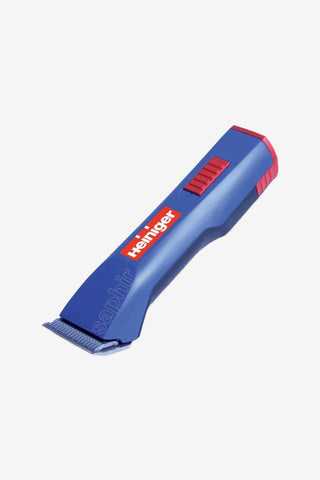
Heiniger Saphir is a clear example.
It weighs about 425 grams and is particularly suitable for hard-to-reach areas like the head and legs. But for those who clip often and keep the coat short, it can also be used on larger parts of the horse.
Suitable for you who: detail clip, want a complementary machine, or regularly maintain an already short coat.

A new generation
smaller, lighter, more powerful
A development we are particularly looking at for this season is that even the larger clippers are becoming cordless, lighter, and more ergonomic.


Opal, Xplorer or Saphir – which should I choose?
If you are between models, you can think like this:
Heiniger Xplorer: choose it when capacity and full clipping are top of the list.
Heiniger Opal: choose it when you want to combine low weight, long battery life, and flexibility.
Heiniger Saphir: choose it especially for detail work, head, legs, and maintenance clipping.
Lister Eclipse: choose it if you want the feel and capacity of a real full clipping machine but prefer a cordless design.
So the question is not:
Which clipper is best?
But:
Which clipper is best for how I actually clip?

Which blade should I choose?
Clipper blades
Have more than one blade available if you are clipping the whole horse. Then you can switch when one blade gets hot instead of trying to push through the entire horse with the same one.


The blade is just as important as the machine
Many make a mistake here.
They invest thousands in a good clipper – and then continue clipping with a dull blade.
The result is poorer, the machine works harder, and clipping becomes less pleasant for the horse.
World Horse Welfare recommends that the horse is clean and dry and that the blades are sharp. They also recommend checking the blade temperature regularly and oiling them during clipping to reduce the risk of overheating.
This is not just a matter of a neat finish.
It is also about horse welfare.
Which blade should I choose?
Different blades give different clipping lengths.
A fine blade provides a closer and more competition-like finish, while a coarser option may be relevant when the coat is very thick.
Svensk Ridsport, for example, has the Heiniger 31F/15 clipper blade that clips the coat down to about 1–2 mm and is intended for a fine finish.
For Saphir and Opal, there are also snap-on blades of about 1.5 mm that can be sharpened several times.
Our tip: have more than one blade available if you are going to clip the whole horse. Then you can switch when one blade gets hot instead of trying to push through the entire horse with the same one.
Oil is not an accessory – it is part of clipping
If there is one product that is easy to forget when the clipper is taken out of the cupboard, it is the oil.
But the blades need to be lubricated regularly.
The oil reduces friction between the blades and helps the machine work correctly.
World Horse Welfare explicitly recommends regular oiling to prevent the blades from getting too hot.
At Svensk Ridsport, there is clipper oil from Lister, and several clippers come with a small amount of oil from the start.
But if you are going to clip for a whole season:
buy the oil at the same time as the machine.
It's like buying a saddle without saddle soap – you will need it.
Checklist before clipping
Wash the horse
Dirt, grease, and dust make it significantly harder for the blades to work through the coat. World Horse Welfare recommends a clean and dry coat for clipping to go as smoothly as possible.


Prepare the Coat – It Makes a Bigger Difference Than You Think
Want an even clipping?
Start the day before.
Dirt, grease, and dust make it significantly harder for the blades to work through the coat.
World Horse Welfare recommends a clean and dry coat for the smoothest clipping possible.
If weather and stable conditions allow, a thorough wash before clipping can be well-invested time.
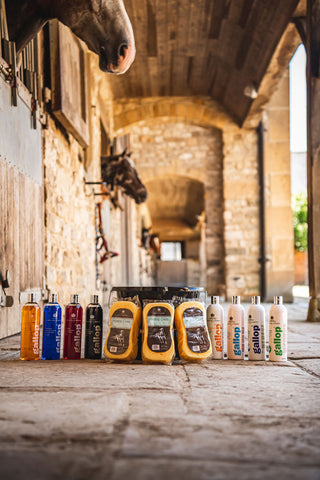
At Svensk Ridsport, for example, there is Gallop Deep-Cleaning Shampoo from Carr & Day & Martin, designed to remove dirt, sweat, and grease from the coat.
Once the horse is clipped, Dreamcoat Spray from the same brand can be used for shine and finish. It also has a non-slip formula and can therefore be used even before braiding and around areas where regular coat shine is not always desirable.
This gives a fairly simple clipping routine:
Wash → let the horse dry completely → brush thoroughly → clip → brush away loose hair → finish.

The horse doesn't like the clipper – don't automatically choose a stronger method
This might be the most important part of the article.
A horse that is afraid of the clipper doesn't just need to 'get used to it'.
The sound, vibration, and feel of the machine against the skin can be unpleasant or frightening.
World Horse Welfare recommends breaking the introduction into small steps. For example, start with the sound of the machine at a distance and only proceed when the horse is relaxed at the current level.
Product choice can also play a role here.
A lighter and quieter machine can be easier to work with around a sensitive horse than a large machine with more noise and vibration.
But:
no machine replaces good acclimatization.
If the horse becomes stressed – take a break.
Getting a perfect full clip in one evening is less important than ensuring the next clipping can also be done safely.
The clipper gets hot – what do I do?
Stop.
Regularly feel the blades during work.
If they feel too hot against your own skin, it's time to let them cool or change blades.
Oil regularly and brush away hair that collects around the blades.
There are also products that clean and cool the blades during work. For example, Swedish Equestrian Sports offers Wahl Blade Ice, which is designed to reduce friction and heat and clean the blades.
But cooling spray does not replace oil or breaks.
What do I really need to buy for the clipping season?
You need less than you think – but the right things.
A good base is:
- Clipper adapted to how much you clip.
- An extra blade.
- Clipper oil.
- Cleaning brush.
- Possibly cooling/cleaning spray for the blades.
- Deep cleaning shampoo before clipping.
- Brushes to get the coat really clean.
- Coat shine/finish afterwards.
- Blanket adapted to how much coat you remove.
And if you choose a battery clipper for a lot of full clipping, an extra battery is one of the accessory investments you will likely appreciate the most.

to consider
checklist
Dirt, grease, and dust make it significantly harder for the blades to work through the coat. World Horse Welfare recommends a clean and dry coat for the smoothest clipping possible.
Quick Guide – Which Clipper Suits You?
I clip several horses completely:
Consider the Heiniger Xplorer or a similarly powerful full-body clipper.
I clip my own horse and want low weight:
Heiniger Opal is particularly interesting.
I want a cordless full-body clipper in traditional design:
Look at Lister Eclipse.
I mainly clip the head and legs:
Heiniger Saphir.
I clip often and keep the coat short:
A smaller snap-on clipper like Saphir or Opal might be more convenient than a large machine.
My horse is sensitive to noise and vibrations:
Prioritize low noise level, low weight, and especially a slow, positive acclimatization.
Don't Wait Until the First Clipping
Perhaps the most important advice for this year's clipping season is actually the simplest:
bring out the clipper now.
Check that it works.
Charge the batteries.
Inspect the blades.
Send dull blades for sharpening.
Ensure you have oil.
And if the horse is young or unaccustomed to clipping – start acclimatization before you actually need to remove the coat.
Then the first clipping evening won't be a combination of a discharged battery, dull blade, and a horse that has never heard the machine before.
The clipping season doesn't have to start when the first coat falls on the stable floor.
The best clipping season starts a few weeks earlier.